
Article: Adhesive-Backed vs. Non-Adhesive Wallcovering Options
Adhesive-Backed vs. Non-Adhesive Wallcovering Options
Adhesive-Backed vs. Non-Adhesive Wallcovering: What's the Difference and Which Should You Use?
When sourcing printable wallcovering material, one of the first decisions to make is whether to go with an adhesive-backed product or a non-adhesive one. It sounds like a significant fork in the road, but in practice, the two options have a lot in common, and for many projects, either could work. The difference mostly comes down to how you prefer to install it and what options you want at the end of its life.
Here's the breakdown of what each option actually means, where they differ, and how to think about the choice for different types of projects and customers.
SHARE:


What Adhesive-Backed Actually Means
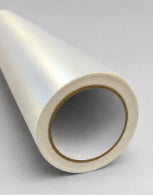
Adhesive-backed wallcoverings have a pressure-sensitive adhesive layer built into the backing. You peel off the liner and apply it directly to the wall with no paste, no separate adhesive, and no additional materials required. Panels can be repositioned during installation, which can be useful on larger walls or when working with pattern-matched designs.
One thing worth clarifying: adhesive-backed doesn't mean temporary. A pressure-sensitive adhesive bonds firmly to a properly prepared wall surface and can hold for years or decades.
What it does offer, unlike paste, is the option to remove it cleanly down the line. Whether that matters depends on the project and end customer. For a permanent install in a space that isn't going anywhere, it may not be relevant at all. For a leased commercial space, a branded environment that gets refreshed every few years, or a customer who just likes knowing they have that option, it can be the deciding factor.
Adhesive-backed wallcoverings also work well for short-term applications like trade show booths, event spaces, and pop-up retail locations where the installation genuinely is temporary and clean removal matters from the start.
What Non-Adhesive Means
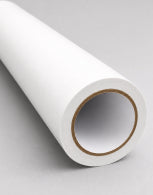
Non-adhesive wallcovering has no adhesive on the backing. It's a substrate designed to be hung with wallcovering paste or used as a canvas wrap. For use as a wallcovering, paste is applied and then the panels are hung, smoothed, and trimmed.
Paste-applied wallcoverings are permanent. It's not designed to be removed cleanly, and stripping it down the line may affect the wall surface.
Non-adhesive wallcoverings are not a good fit for short-term or temporary applications. If there's any chance the installation will need to come down cleanly, adhesive-backed is the better choice.
How to Think About the Choice
For most permanent installs, both options can be used, and the decision often comes down to preference: the installer's, the customer's, or whoever is speccing the project. Neither is inherently better for long-term use. The substrate performs the same way regardless of which backing is used.

A few questions that can help decide which is the right option:
Is there any chance this will need to come down?
If the answer is yes, or even maybe, adhesive-backed is the safer spec. Clean removal without wall damage is only possible with peel-and-stick; once paste is involved, stripping is a different kind of job.
Who is the end customer and how do they live?
Customer demographics and lifestyle can be useful to consider.
For wallpaper businesses, thinking through the end customer's lifestyle and situation is one of the more reliable ways to steer toward the right product.
Homeowners are more of a mixed picture. Someone early in homeownership who bought a starter home may still be thinking in terms of resale value and future changes. Someone in a long-term home who is doing a deliberate renovation is more likely to commit to a permanent install and may not think twice about paste. Understanding where they are in that spectrum matters more than the fact that they own.
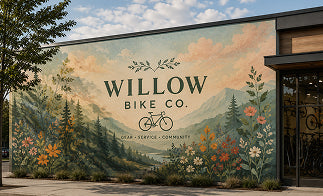
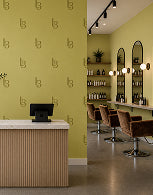
Commercial customers tend to have clearer requirements. Hospitality and corporate environments with long refresh cycles and professional installation teams may opt for non-adhesive paste application. Retail, restaurant, and branded environments that update their look seasonally are almost always better served by adhesive-backed, regardless of how long any individual install lasts.
It also helps to think about what the customer is drawn to aesthetically. Someone buying a bold, trend-driven pattern is more likely to want to change it in a few years than someone investing in a classic, neutral design. That's not a hard rule, but it's a useful signal when a customer hasn't thought through the installation question themselves.
For print shops and POD companies, this kind of customer context is often already in the conversation. If a customer mentions renting, rebranding, or changing up the space regularly, that's a clear lean toward adhesive-backed. If they're talking about a build-out, a permanent installation, or working with a contractor, either option is on the table.
Who is doing the installation?
Professional wallcovering installers often have a strong preference for one method or the other based on how they work. If you're sourcing for a customer who has their own installer, it's worth asking before speccing. For DIY installs or customers without a professional installer, adhesive-backed is generally easier to work with: no paste, no mess, no additional materials.
Is the project short-term or event-based?
If the install is for a defined period like an event, a seasonal campaign, or a brand activation, adhesive-backed is the only option that makes sense. Paste application isn't practical for anything that needs to come down on a schedule.
Print Compatibility
From a print production standpoint, adhesive-backed and non-adhesive PrestoTex are the same substrate. Both versions run on solvent, eco-solvent, latex, and UV inkjet printers and produce the same output. Switching between the two versions doesn't require any changes to ICC profiles, print settings, or production workflow.
This makes it straightforward to stock both and spec them based on the project rather than on what's easier to run.
Test a Sample Roll
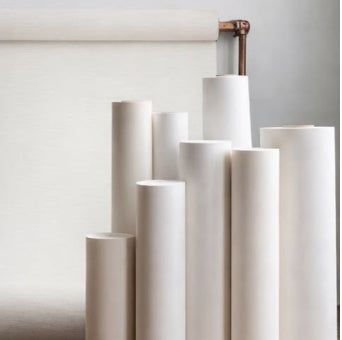
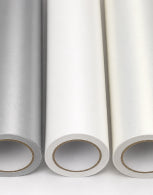
Try both options. Our sample rolls are available as an adhesive-backed peel-and-stick wallcovering and non-adhesive.
SHOP SAMPLE ROLLS>