01
Peel-and-Stick
Adhesive-Backed
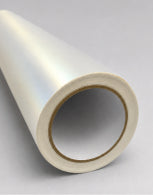
The release liner peels away to expose pre-applied adhesive. Press the exposed adhesive directly to the prepared wall. No paste, no mixing, no wet edge.
- Adhesive
- Pre-applied
- Repositionable
- Pre-applied








PrestoTex Installation Guide
A complete walkthrough of installing PrestoTex printable wallcovering substrates, covering both adhesive-backed peel-and-stick and non-adhesive paste-applied construction. Learn about the surface preparation process and hanging methods for each substrate.
Read first
Choose your construction
The hanging method differs between adhesive-backed and non-adhesive PrestoTex. Surface preparation, layout planning, finishing, and care are the same. The full step-by-step guide for each construction is below.
01
Peel-and-Stick
The release liner peels away to expose pre-applied adhesive. Press the exposed adhesive directly to the prepared wall. No paste, no mixing, no wet edge.
02
Paste-Applied
Apply Roman PRO-838 Heavy Duty Clear Wallcovering Adhesive to the wall, then hang the dry strip into the wet paste. This is the traditional method for installing wallcoverings, used in both residential and commercial applications.
Recommended tools
The same toolkit covers both adhesive-backed and non-adhesive installation. Non-adhesive installations also require Roman PRO-732 Clay Wallcovering Adhesive, a paint roller for paste application, and a damp sponge for seam cleanup.
Pre-installation prep
The first 48 hours after delivery matter. Inspect for shipping damage, confirm the order is complete, and let the substrate acclimate to the room before installation begins.
Check PrestoTex packaging on receipt. If you find damage, file a claim with the carrier immediately and contact us before proceeding.
After opening, confirm that all expected products and quantities have been received. Setting this baseline prevents surprises mid-install.
Allow the product to acclimate to room conditions for 48 hours prior to installation. The room temperature during installation should be climate controlled between 50°F and 100°F.
After printing, organize panels in order from left to right. Confirm pattern alignment between adjacent panels.
Once aligned, mark overlap lines, liner cuts, and ceiling lines on each panel with a Stabilo water-soluble pencil. Plan for a 1.5 inch overlap between adjacent panels. Label each panel for setup and include installation drawings if you're shipping the project to a job site.

Choose & prepare the surface
Both adhesive-backed and non-adhesive PrestoTex variations require the same preparation. Most installation issues trace back to surface prep, not the substrate.

Pick a smooth, dry, and clean surface. Walls, doors, windows, and glass are the most common applications. The wall must be flat, smooth, clean, and dry. Compatible surfaces include primed and painted drywall, PVC board, Sintra, acrylic, painted MDO wood, aluminum panels, Dibond, and glass for adhesive backed installations.
Repair holes, raised texture, and uneven areas. The drywall finish should be at Level 5 per ASTM C840 Drywall Finish Standards.
Do not apply wallcovering to unsealed drywall. Walls must be primed and painted to seal porous drywall. Glidden Gripper primer is recommended, applied with a smooth nap roller for best results. The ideal wall surface is smooth with semi-gloss paint. Glidden Premium Semi-Gloss is recommended.
Critical · 30-day cure
Walls must dry for a full 30 days after painting before installation. Installing on freshly painted walls is the most common cause of bubbling, because the paint continues to outgas as it cures. The 30 day rule applies to both adhesive-backed and non-adhesive installations.
After the wall has been primed, painted, and fully cured, wipe down the surface with a 70/30 mix (70% water, 30% isopropyl alcohol) and allow it to completely dry before installation. For outdoor installations, a pump spray is recommended to apply the alcohol solution efficiently.
Compatible Surfaces
Surfaces to Avoid
Layout & bleed
Strip layout and bleed planning are identical for adhesive-backed and non-adhesive installation. Get the layout right before any adhesive is exposed or any paste is applied.
Measure the height of the installation area. Confirm that each strip of wallcovering is long enough to cover that area with the correct bleed at top and bottom. Organize strips in the sequence in which they will be applied. Lay each strip graphic side down on a clean table or surface.
Leave a 2 inch minimum bleed where the wallcovering butts to the ceiling and to base molding, for positioning and trimming to size.
Leave a 6 inch minimum bleed on the leftmost and rightmost strips where the wallcovering butts to the side edges of the wall.
Include at least 1 inch of overlap at every seam.
Include 1 inch overlap at seams and splice or double-cut to achieve a butt seam appearance, unless otherwise specified.
Installing adhesive-backed
Adhesive-backed PrestoTex installs by exposing the pre-applied adhesive in increments and pressing the substrate to the wall. Work from the top down, smoothing from the center outward. The substrate is repositionable while it's being installed, so small alignment corrections are possible without restarting.
Starting at the top of the strip, carefully peel back 4 to 6 inches of liner from the back side and crease it toward the bottom of the graphic. Without stretching the material, position the exposed adhesive area to the wall, using a level to ensure the strip is square.
Once positioned, smooth out with a squeegee starting at the top and working from center outward as you work down. Apply medium pressure throughout.
Continue peeling back the liner in 4 to 6 inch increments. Smooth against the wall from the center outward and check alignment after each section. Repeat all the way down the strip.
If bubbles appear during application, gently peel the graphic back from the wall to release the bubble and reapply. For small bubbles that remain, carefully pierce the bubble with the tip of an X-Acto knife and smooth out with a squeegee.
For multiple strips, follow the planned seam approach. Overlap seams require at least 1 inch overlap. Butt seams require 1 inch overlap with splice or double-cut to achieve the butt appearance.
Trim around obstructions like light switches, baseboards, and outlets with a razor knife and a fresh blade. Trim excess material along edges that terminate at the ceiling, base molding, or the edge of the wall. Use a fresh blade for clean cuts.
Pro tip · Consistent pressure
Consistent medium pressure across the entire wall surface ensures good adhesion and prevents bubbles from appearing later. Don't rush the squeegee step.
Installing non-adhesive
Non-adhesive PrestoTex uses the paste-the-wall method, where adhesive is applied directly to the prepared wall and the dry strip is hung into the wet paste. This is the standard method for installing woven polyester wallcoverings. Roman PRO-838 Heavy Duty Clear Wallcovering Adhesive is the recommended.
Using a paint roller, apply Roman PRO-838 Heavy Duty Clear Wallcovering Adhesive to the wall in a section roughly the width of one strip plus a few inches. Apply evenly. Avoid puddles, dry spots, or thick beads at the edges. Maintain a wet edge so the next strip's adhesive blends with the current section.
Pick up the dry strip and position the top against the wall, using a level or laser level to ensure the strip is square. Allow the natural weight of the strip to align it vertically.
Do not stretch the material as you position it.
Once positioned, smooth the strip with a squeegee starting at the top and working from center outward in firm, overlapping strokes. Work down the strip section by section.
The strip is repositionable while the paste is wet. Small alignment corrections can be made by gently lifting and re-placing.
Apply paste to the next section of wall, overlapping slightly with the previously pasted area to maintain a wet edge. Hang the next strip according to your seam plan.
The woven polyester substrate is dimensionally stable, so butt seams are the standard finish. Match the strip edges precisely against the previous strip.
Wipe excess paste from seams and edges immediately with a damp sponge, before the paste begins to set. Dried paste is much harder to remove cleanly. Use a clean section of sponge for each pass. Rinse the sponge frequently.
Trim around obstructions, ceiling, baseboards, and wall edges with a sharp razor knife and a fresh blade. Cut while the paste is still slightly wet for the cleanest cut.
Wipe Stabilo pencil marks away with water once trimming is complete.
Allow the installation to cure for at least 24 hours before exposure to air movement, drafts, or temperature changes. Keep the room climate controlled between 50°F and 100°F throughout the cure period.
Pro tip · Maintain a wet edge
The most common mistake in paste-the-wall installation is letting the pasted section dry before the strip is hung. Apply paste to one strip-width section at a time and hang immediately. If the wall starts to look matte or tacky, re-roll a thin coat of paste before hanging.

Care & maintenance
Regular cleaning maintains the printed surface and the substrate's longevity. The same care routine applies to both adhesive-backed and non-adhesive installations.

Use a mild soap and water solution. Dawn or Joy dish soap diluted with water works well. Spray the solution onto a dry, clean, lint-free cloth and wipe in one direction gently to protect the ink. Do not scrub. Rinse with fresh water to remove any residue, then wipe dry.
Ordinary dirt smudges and most grime can be removed with the mild soap and water solution. For tougher stains, the same solution applied promptly is the recommended approach.
Safe to Use
Surfaces to Avoid
Removal
Adhesive-backed PrestoTex is designed for removal and reinstallation. Non-adhesive PrestoTex installed with paste is intended as a permanent application.
Starting in a corner, carefully lift the wallcovering strip away from the wall. Slowly pull back at a 90 degree angle to create the least amount of stress on the painted surface. Continue peeling slowly, keeping the angle at 90 degrees and diagonal to the strip.
If you're reapplying the graphic, do not wrinkle the material or allow the adhesive side to touch itself or any surface.
Reinstallation
Adhesive-backed PrestoTex can be removed and replaced multiple times. The adhesive becomes less effective over time as it collects dust and fibers, so plan reinstallations carefully and replace strips that have lost adhesion.
Non-adhesive PrestoTex installed with paste is not designed for repositioning once the adhesive has bonded and is a permanent installation.
Troubleshooting
Most installation issues come from the wall surface, not the substrate. These are the most common problems and how to address them.
Lightly press or smooth bubbles outward with a squeegee. For stubborn bubbles, peel back the affected area and reapply, smoothing from center outward. For small bubbles that remain, pierce the bubble with the tip of a sewing pin or X-Acto knife and smooth out in a circular motion.
Late-appearing bubbles are almost always caused by the wall surface. Common causes:
To remove a late-appearing bubble, smooth the area outward with a squeegee or pierce with a sewing pin and smooth in a circular motion. If bubbles continue to reappear after correction, the surface may not be suitable for installation. Consider relocating the install or rebuilding the wall surface.
Wipe Stabilo water-soluble pencil marks promptly with water using a clean cloth. The pencil is designed to disappear with light moisture. When using Stabilo pencils, use light strokes to keep clean up easy and quick.
Wipe excess paste from seams immediately with a damp sponge. Dried paste is much harder to remove. Rinse the sponge frequently and use a clean section for each pass. If paste has dried, soften it with a damp warm cloth before wiping.

Installation tips
Field-tested suggestions from installers who do this every day. These apply to both adhesive-backed and non-adhesive installations unless noted.

Frequently asked
The questions installers, print shops, and end customers ask most often when planning or executing a PrestoTex installation. For questions not covered here, contact Presto Tape.
Adhesive-backed PrestoTex installs by peeling the release liner in 4 to 6 inch increments and pressing the exposed adhesive to the wall, smoothing from center outward. Non-adhesive PrestoTex installs by applying Roman PRO-838 Heavy Duty Clear Wallcovering Adhesive to the wall first, then hanging the dry strip into the wet paste. Both use the same surface preparation, the same butt or overlap seam options, and the same finishing techniques.
Walls must dry for a full 30 days after painting before PrestoTex is installed. Installing on freshly painted walls is the most common cause of bubbling, because the paint continues to outgas as it cures. The 30 day rule applies to both adhesive-backed and non-adhesive installations.
No. PrestoTex requires a smooth wall surface for proper adhesion and a clean finished appearance. If the wall has texture, it must be skim-coated to a Level 5 finish per ASTM C840 Drywall Finish Standards before installation. Oil-based paint and anti-graffiti coatings are also not compatible substrates.
Roman PRO-838 Heavy Duty Clear Wallcovering Adhesive is the recommended adhesive for non-adhesive PrestoTex.
Adhesive-backed PrestoTex can be removed and replaced multiple times, but the adhesive becomes less effective as it collects dust and fibers. To reinstall at a later date, save the liner and reapply it to the graphic for a later application. Non-adhesive PrestoTex installed with paste is generally not designed for repositioning once the adhesive has bonded. To remove, peel slowly at a 90 degree angle starting from a corner, taking care not to damage the painted wall surface.
Use a mild soap and water solution like Dawn or Joy. Spray a dry, clean, lint-free cloth and wipe in one direction. Do not scrub. Rinse with fresh water to remove residue, then wipe dry. Avoid steel wool, abrasive sponges, powdered cleansers, and any cleaner containing alcohol, solvents, or bleach.
Continue reading
Follow us